Choosing the best treatment for under-eye hollows usually means weighing a few real options against each other, not just picking the first one you have heard of. Dermal filler, PRF, surgical approaches, and skincare all address the area differently, and they are not interchangeable. Under-eye hollows, sometimes called tear troughs, happen when volume loss along the lower eyelid creates a shadow or sunken appearance, often making you look tired even when you are not. The right treatment depends on what is actually causing the hollowing, how pronounced it is, and what result you are hoping for. Here is how the real options compare and what determines whether a treatment in this particular area is done safely.
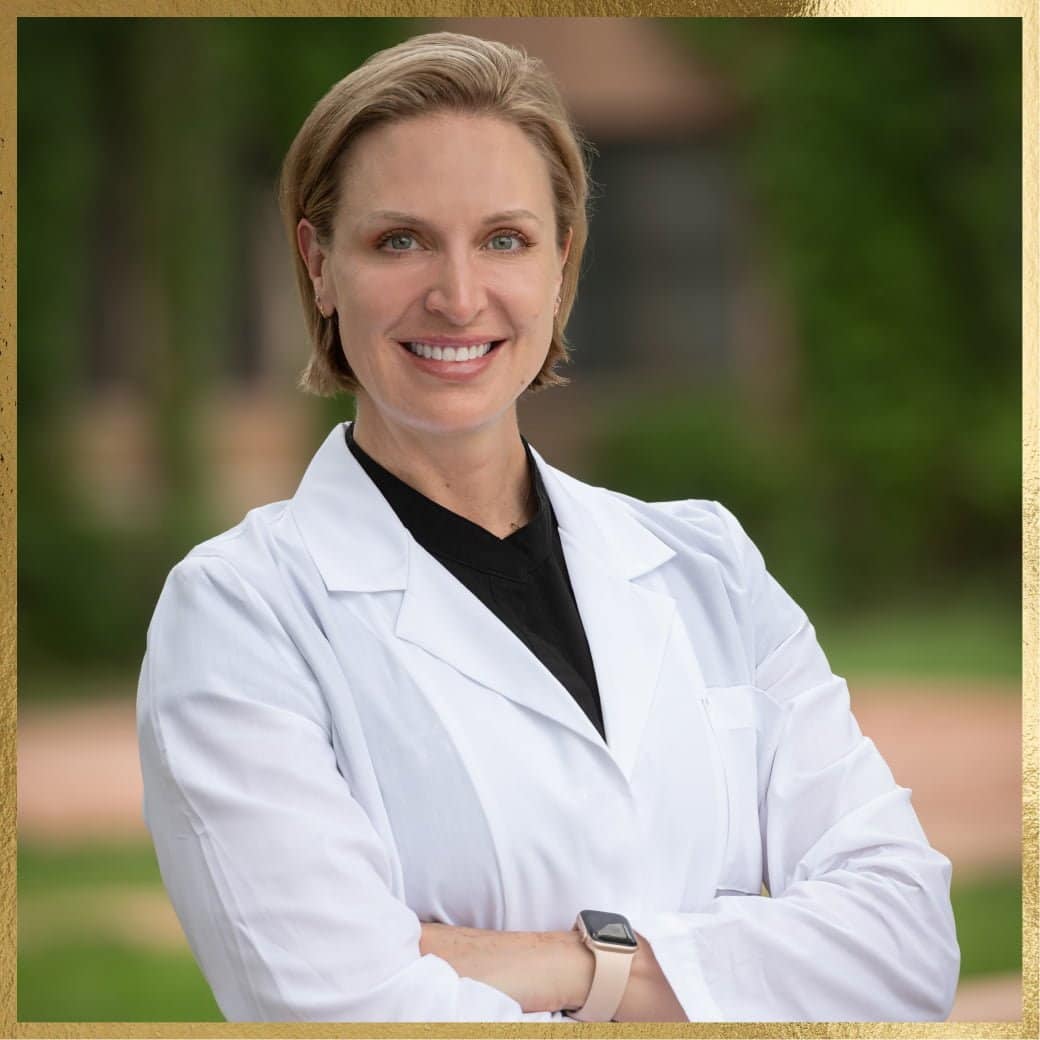
Reviewed for medical accuracy. Under-eye treatment protocols at Aspen Aesthetics + Wellness are reviewed and supported by Kelly McKay, MSN, APRN, CRNA, Owner, and Clinical Director.

Under-eye hollows are usually the result of natural volume loss, as skin, fat, and supporting tissue thin with age, though genetics, sleep habits, and hydration all play a role too. Because the cause is largely structural, rather than surface-level, makeup and topical products can soften the appearance temporarily but rarely resolve it, which is why so many people eventually look into a professional treatment instead.
| Treatment | What It Does | Downtime | Best For |
|---|---|---|---|
| Dermal Filler | Restores lost volume directly | Minimal | Structural hollowing, visible results without surgery |
| EZgel® PRF | Supports the skin’s own regenerative response | Minimal | Pairing with filler for a smoother, more natural transition |
| Surgery | Removes or repositions excess skin or fat | Real recovery time | Significant hollowing or excess skin after non-surgical options |
| Skincare & Lifestyle | Supports skin quality and softens appearance | None | Everyone, but not a stand-alone fix for true hollowing |
Dermal filler is the most common non-surgical option for under-eye hollows, and it is the approach used for under-eye filler at Aspen, where it works by restoring the volume that has been lost, rather than just covering the shadow it creates. Because the tear trough sits close to a dense network of small blood vessels, precise, image-guided placement matters more here than in many other treatment areas, which is worth asking about directly when you are comparing providers. Under-eye filler is also frequently combined with cheek filler for a smoother, more naturally elevated transition between the lower eyelid and cheek.
The EZgel PRF treatment, short for platelet-rich fibrin, is often paired with filler for a more regenerative, natural-looking result. Rather than only adding volume, PRF uses your own concentrated platelets to support the skin’s healing response, which is part of why the two treatments are frequently combined rather than chosen as either/or.
For more significant hollowing, especially when there is excess skin or fat involved, a surgical approach like lower blepharoplasty may be worth discussing with a specialist. It is a bigger commitment than filler or PRF, with real recovery time attached, so it is generally considered once non-surgical options have been explored first, not before.
Hydrating eye creams, consistent sleep, and sun protection can support skin quality and take some edge off a tired appearance, but they do not restore lost volume. They are worth doing regardless of which treatment you choose, though on their own they are rarely enough to resolve true hollowing.
The tear trough is considered one of the higher-risk zones for vascular complications in facial filler, largely because of how close the treatment area sits to delicate blood vessels. That does not mean the treatment is unsafe; it means technique and imaging matter more here than almost anywhere else on the face.
This is exactly why providers who use real-time imaging to map blood vessels before placing filler, rather than relying on anatomy alone, tend to manage this area more safely. At Aspen Aesthetics + Wellness, high-resolution Mindray® Ultrasound is used for this purpose specifically, giving providers a clear view of vascular anatomy before any filler is placed.
The cost of under-eye treatment depends on several factors, including how many syringes or sessions are needed, whether filler is combined with PRF or another treatment, and the experience of the provider performing it. Most people need at least two sessions to reach a full result, since building volume gradually in this delicate area is safer than trying to correct everything at once. An exact plan and cost are best confirmed at consultation rather than estimated in advance.
A consultation starts with an honest look at what is actually causing your under-eye concerns, since hollowing, puffiness, and discoloration are not the same problem and do not respond to the same treatment. From there, your provider builds a plan around your anatomy and goals, rather than defaulting to a single standard approach for everyone.
Because this area carries real, if uncommon, risk, the setting in which a treatment happens matters as much as the treatment itself. Health history is reviewed before anything is injected, placement is guided by ultrasound rather than estimation, and a provider takes the time to explain what is realistic for your specific hollowing. That is the standard at Aspen, where under-eye treatment protocols are reviewed under Kelly McKay’s oversight as clinical director.
If tired-looking eyes have you comparing options, a consultation is the fastest way to find out which treatment, or combination, actually fits what you are dealing with. Book a consultation to talk through what is realistic for you.
This was my first ever chemical peel, and Kelly was great! She is so educational and helpful in explaining the process and all of the following steps + skincare. I can’t wait to see my results and follow up with her again!

Monday 9 AM–5 PM
Tuesday 9 AM–5 PM
Wednesday 9 AM–5 PM
Thursday 9 AM–5 PM
Friday 9 AM–5 PM
Saturday 9 AM–5 PM
Sunday 10 AM–3 PM

Thursday, November 5
Join us for our open house from 5:30 to 8:30 PM. RSVP to be entered in over $5,000 in giveaways, including a year of Tox.
RSVP now